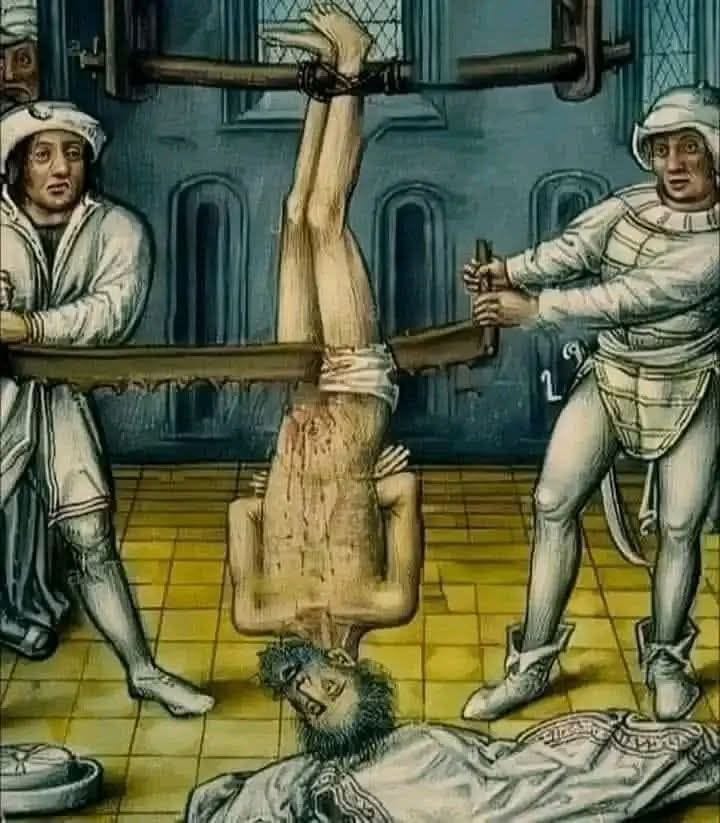
In a world where beliefs are often a matter of convenience, the question of what we'd be willing to die for stands as a profound test of our convictions. The story of Simon the Zealot, who was sawed in half for his unwavering faith, serves as a poignant reminder that true belief is not just a matter of words, but of unyielding commitment in the face of the ultimate sacrifice.
Confronting the Uncomfortable Truth Most of us live our lives carefully curated, avoiding the discomfort of truly examining our deepest beliefs. We're content to argue our positions online or espouse noble principles over dinner, but the true test comes when we're faced with the choice between our convictions and our survival. As the author rightly points out, the apostles of Christ answered that question with their lives, not because they were religious fanatics, but because they had encountered a truth so profound that denying it became an impossibility, even in the face of torture and death.
The Transformative Power of Belief What is it about certain beliefs that can inspire such unwavering dedication, even to the point of sacrificing one's life? The author suggests that it's not a matter of religious fanaticism, but rather a profound transformation that occurs when we truly encounter a truth that resonates with the very core of our being. It's a transformation that transcends the comfortable existence we've constructed, forcing us to confront the stark reality that some truths are worth fighting for, even if it means facing the ultimate price.
The Rarity of Uncompromising Conviction In a world where belief is often a matter of convenience, the author's observation that "most of us will never answer that question" is a sobering one. We've become adept at rationalizing our compromises, convincing ourselves that our comfortable existence is more important than the hard truths that may demand our very lives. But the stories of the apostles and other martyrs throughout history serve as a reminder that there are those who have answered that question, who have faced the ultimate test and emerged with an unwavering conviction that has the power to inspire and challenge us all.
The Courage to Face the Abyss Ultimately, the author's exploration of what it means to die for one's beliefs is a call to confront the uncomfortable realities of our own convictions. It's a challenge to examine the depth of our beliefs, to be willing to face the abyss of our own mortality in service of something greater than ourselves. It's a reminder that true courage is not the absence of fear, but the willingness to confront it head-on, to choose the truth over the safety of our carefully constructed lives.
As we navigate the complexities of our beliefs in an ever-changing world, the story of Simon the Zealot and the apostles serves as a powerful testament to the transformative power of uncompromising conviction. It's a reminder that the true measure of our beliefs lies not in the words we use to defend them, but in the actions we're willing to take to uphold them, even in the face of the ultimate sacrifice.
"The truth doesn't hide. It waits for those brave enough to look."
The Wise Wolf