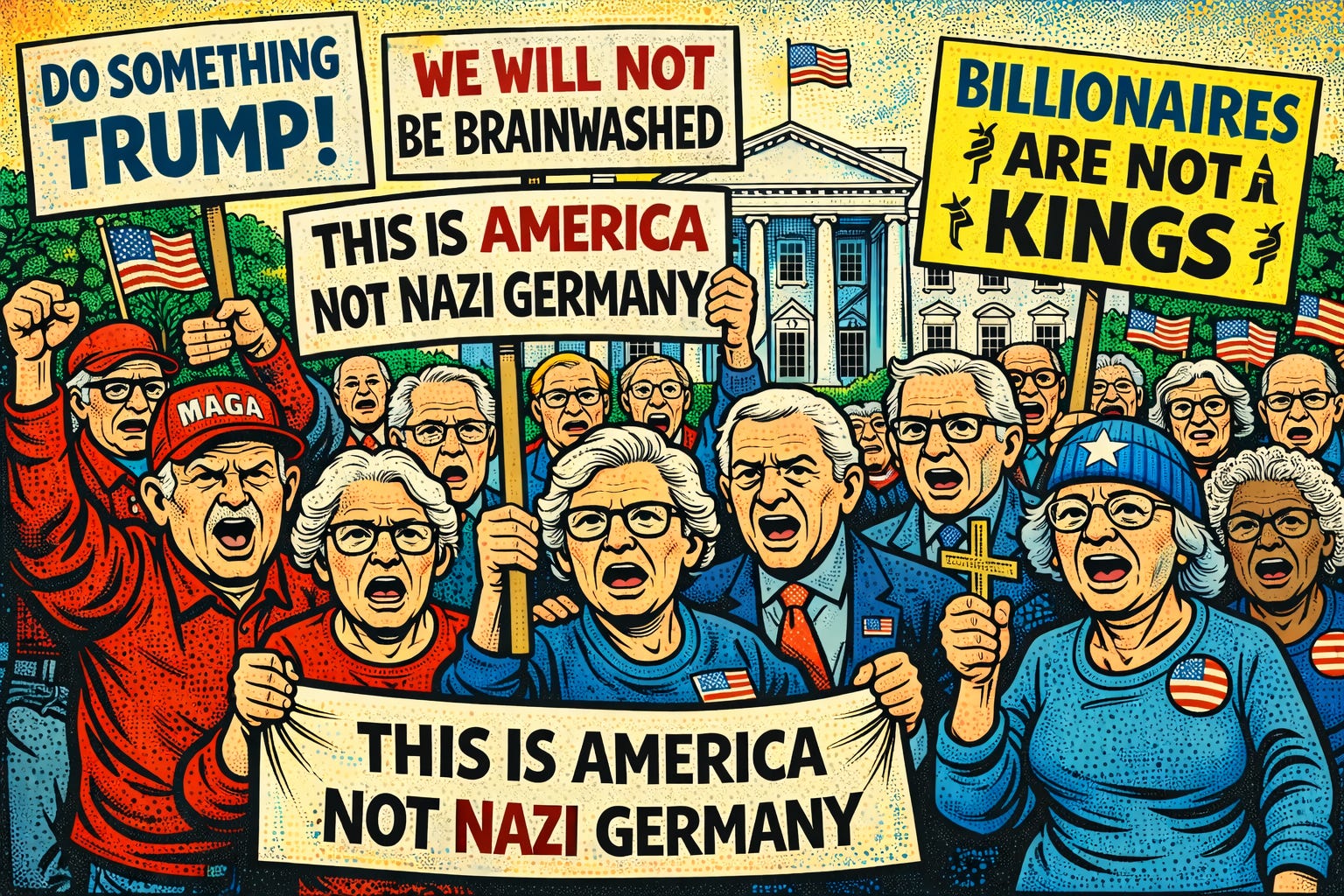
As the political landscape in the United States grows increasingly polarized and divisive, a surprising glimmer of hope has emerged from an unexpected source – the nation's senior citizens. Contrary to the often-held perception of the elderly as passive observers, a growing contingent of seniors is poised to play a pivotal role in shaping the country's future, serving as the last bastion of moral authority in a society grappling with complex sociopolitical challenges.
The Moral Authority of America's Seniors
In a world where the lines between truth and falsehood have become blurred, and the voices of reason are often drowned out by the cacophony of extremism, the wisdom and life experiences of senior citizens hold the key to restoring a sense of moral clarity. These individuals, who have weathered the storms of history and witnessed the ebb and flow of societal change, possess a unique perspective that transcends the partisan divides plaguing the nation.
As the source article eloquently points out, there is a distinct advantage in rallying the senior population to lead the charge for change. Unlike younger generations, who can be easily marginalized or discredited as "radicals" or "extremists," the elderly enjoy a level of moral authority that makes them virtually immune to such attacks. After all, it is far more difficult to dismiss the concerns of a Vietnam War veteran or an 80-year-old grandmother as those of a "violent extremist."
The Power of Peaceful Protest
The power of peaceful protest has long been a driving force for social and political change, and senior citizens are uniquely positioned to leverage this tactic. As the source article suggests, a large-scale march on Washington by 100,000 or more senior citizens would be a formidable display of moral resolve, one that would be nearly impossible for the government to suppress without sparking a nationwide backlash.
Such a demonstration would not only draw attention to the concerns of the elderly but would also serve as a powerful symbol of the intergenerational unity required to enact meaningful change. By joining forces, seniors and their younger counterparts could form a coalition of conscience, amplifying their collective voice and challenging the status quo in a way that resonates with the broader public.
The Importance of Preparation and Organization
However, as the source article rightly points out, the path forward is not without its challenges. Organizing and mobilizing a large-scale senior-led movement requires careful planning and strategic execution. The ability to navigate the complexities of the "Technocratic State" and the ever-evolving tactics of those in power is crucial to ensuring the success of such an endeavor.
This is where the role of preparation and organization becomes paramount. Senior citizens must be empowered with the knowledge and resources necessary to navigate the political landscape effectively, leveraging their collective experience and wisdom to outmaneuver those who seek to undermine their efforts. This may involve the establishment of robust communication networks, the cultivation of strategic alliances, and the development of a comprehensive action plan that anticipates and addresses the potential obstacles they may face.
Conclusion
As the United States grapples with the ongoing erosion of its democratic institutions and the rise of authoritarian tendencies, the time has come for the nation's senior citizens to reclaim their rightful place as the guardians of moral authority. By harnessing the power of peaceful protest and leveraging their unique position in society, this often-overlooked demographic can serve as the catalyst for a much-needed reckoning, one that has the potential to reshape the country's trajectory and restore a sense of hope in the face of adversity.
"The truth doesn't hide. It waits for those brave enough to look."
The Wise Wolf