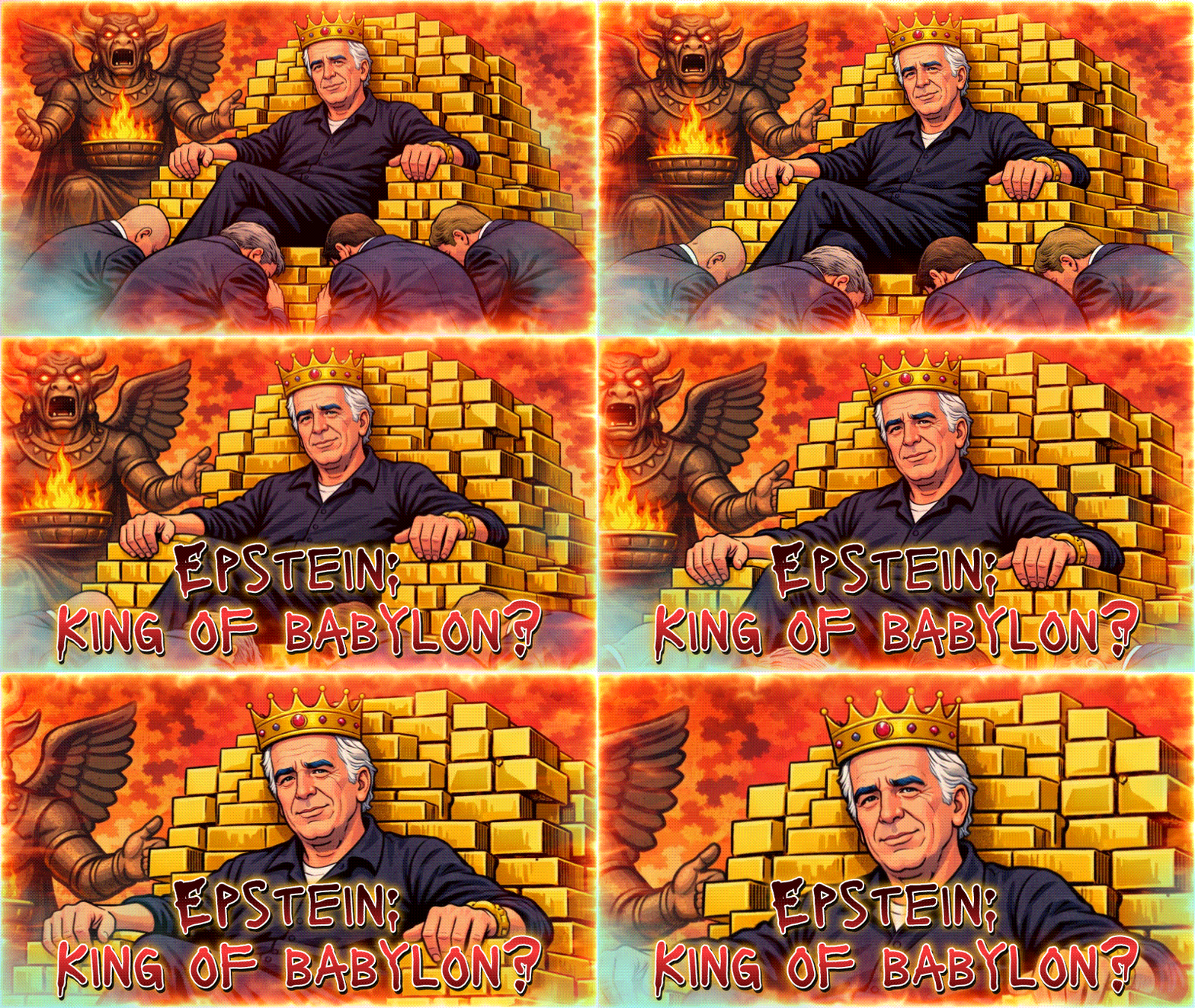
The revelations surrounding Jeffrey Epstein's disturbing financial dealings have left the world reeling with a sense of unease. Beyond the sordid details of his criminal activities, one aspect of his life has particularly captivated the public's attention: the peculiar naming of his bank accounts.
Buried deep within the Department of Justice's files, a chilling discovery emerges – Epstein's decision to name his accounts after a child-eating demon from ancient mythology. This unsettling connection has sent shockwaves through the investigative community, leading many to question the true nature of Epstein's operations and the dark forces that may have been at play.
Delving into the Depths of Depravity
The name Epstein chose for his accounts, "Moloch," is not just a random moniker. Moloch was an ancient Canaanite deity associated with child sacrifice and ritual killings. The very idea that Epstein, a man accused of exploiting and abusing minors, would knowingly align himself with such a sinister figure has ignited a firestorm of speculation and outrage.
Experts in the field of ancient religions and occult practices have weighed in, suggesting that Epstein's choice of account name may have been a deliberate nod to a deeper, more disturbing agenda. "Moloch was often depicted as a bronze statue with the head of a bull and the body of a man," explains Dr. Sophia Bellagio, a renowned scholar of ancient mythology. "Worshippers would heat the statue to scorching temperatures and then place living children inside, where they would be burned alive as an offering to the deity."
The parallels between Moloch's gruesome rituals and the allegations against Epstein are chilling, to say the least. "It's as if he was openly flaunting his connection to these dark, archaic practices," Bellagio says, her voice tinged with a mixture of horror and disbelief.
Unraveling the Tangled Web of Corruption
As investigators delve deeper into Epstein's financial records and personal connections, the picture that emerges is one of a vast, interconnected network of power, influence, and unspeakable corruption. The fact that Epstein was able to operate with such impunity for so long suggests the involvement of powerful individuals and institutions, all of whom may have been complicit in his crimes.
"This is not just about one man's depravity," says investigative journalist Emily Sinclair. "It's about a system that allowed this to happen, a system that was more concerned with protecting the elite than with pursuing justice. Epstein was a symptom of a much larger, more pervasive problem."
The revelations surrounding Epstein's accounts and their sinister implications have only served to deepen the public's mistrust in the institutions and individuals tasked with upholding the law. As the investigation continues to unfold, the true nature of the darkness that lurked within Epstein's world may finally be brought to light, shedding a disturbing new light on the dark underbelly of power and privilege.
"The truth doesn't hide. It waits for those brave enough to look."
The Wise Wolf