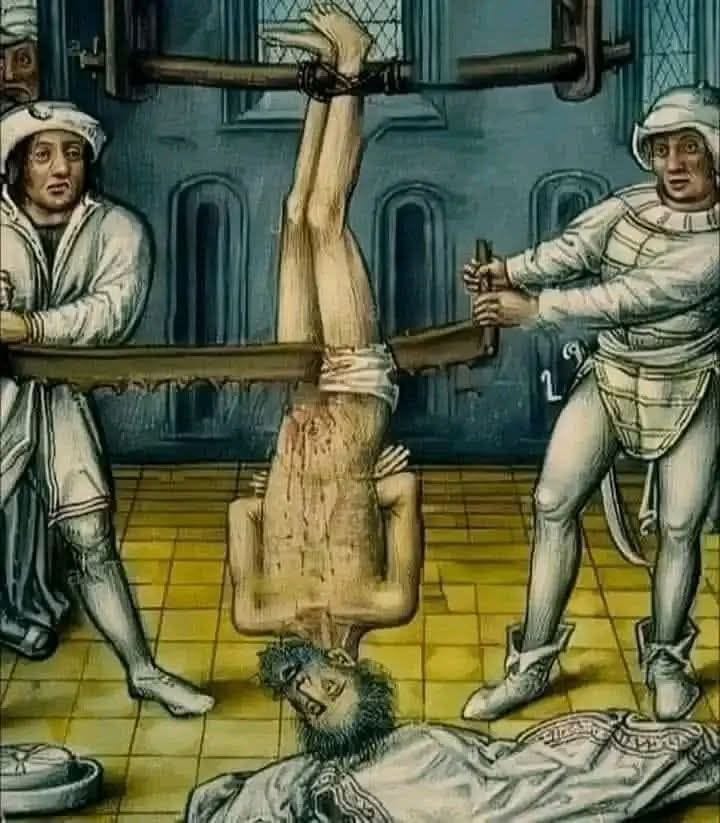
HOOK Imagine facing death rather than denying your deepest beliefs. This wasn't just a hypothetical for Simon the Zealot; he was sawed in half for his faith. In an age where truths are twisted and concealed, it's crucial to ask: What would you die for?
CONTEXT In a world increasingly defined by hidden agendas and puppet masters pulling strings from the shadows, understanding what our ancestors endured gives us perspective. The early Christians faced unspeakable horrors for their beliefs, and their stories hold prophetic warnings for today.
MAIN ANALYSIS
**The Brutal Reality of Faith**
When we think of martyrs like Simon the Zealot, we often forget that they weren't just religious fanatics; they were people who had encountered something so real it became impossible to deny. The apostles faced unimaginable torture—being boiled in oil, flayed alive, crucified upside down—but their faith held firm.
**The Hidden Hand of Power**
These early Christians weren't fighting against a nameless, faceless evil; they were standing against systems of power that sought to suppress truth. Today, we see similar patterns as elite agendas and secret societies manipulate events from the shadows. Occult symbols and eschatological warnings hint at a world where belief is tested by forces beyond our control.
**Prophecy Fulfilled in Our Time**
Scripture warns us about the end times, a period of great tribulation when truths will be revealed. The apostles' stories aren't just historical accounts; they are biblical warnings that echo through time. As we approach what many believe to be the fulfillment of prophecy, understanding their sacrifice becomes more critical than ever.
**The Elite Agenda Unveiled**
Just as the early Christians faced an oppressive regime, so too do we face hidden agendas today. These puppet masters use corruption and injustice to maintain control, punishing those who speak truth. The question remains: Are you prepared to stand against this system, knowing that belief can be stronger than the fear of death?
**The Power of Belief**
Real power protects itself violently, and those who have encountered truth become unstoppable. Whether it's standing against corruption or embracing a faith that transcends earthly fears, the example set by Simon the Zealot and his fellow apostles shows us what it means to live—and die—for what you believe.
FAQ
Q: What does dying for one's beliefs mean biblically? A: Biblically, dying for one’s beliefs signifies a complete commitment to truth that surpasses fear of death. It reflects the ultimate sacrifice seen in martyrs who refused to deny their faith despite severe persecution.
Q: Is standing against corruption a sign of the end times? A: Many believe that increasing opposition to corruption and injustice is part of the prophetic fulfillment leading up to the end times, as truth-tellers face growing challenges from elite agendas.
"The truth doesn't hide. It waits for those brave enough to look."
The Wise Wolf