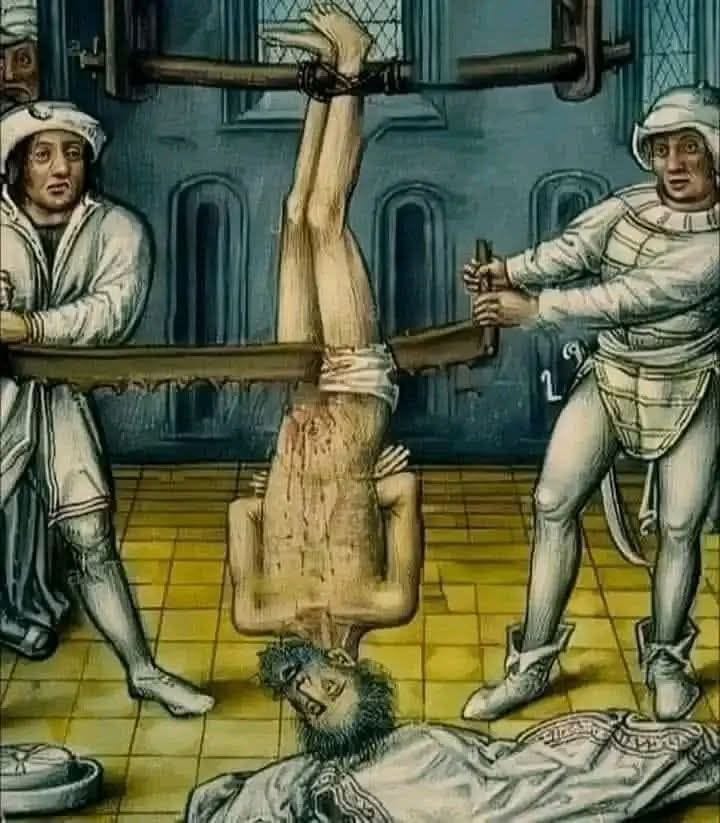
In a world where convenience and conformity often reign supreme, the notion of sacrificing one's life for a belief can seem both noble and perplexing. Yet, throughout history, individuals have chosen this courageous path, exemplifying a profound commitment to their convictions. The story of Simon the Zealot, who was sawed in half for his unwavering faith, serves as a poignant reminder that true belief is not merely a matter of intellectual assent, but a transformative force that can transcend the fear of mortality.
The Burden of Belief: Facing the Ultimate Test
Belief, at its core, is not merely a passive acceptance of ideas, but a deeply personal and transformative experience. It is the lens through which we perceive the world, the foundation upon which we build our lives, and the guiding force that shapes our actions. Yet, for some, belief transcends the comfortable confines of daily existence, becoming a reality so tangible that denying it becomes unthinkable, even in the face of the ultimate sacrifice.
The apostles of Christ, who faced gruesome deaths for their unwavering faith, are a testament to the power of belief to transcend the fear of mortality. Their willingness to embrace torture and execution, rather than betray the truth they had encountered, speaks to a level of conviction that challenges our own comfortable existence. In a world where we often prioritize self-preservation over the pursuit of truth, these individuals serve as a sobering reminder that belief is not merely a philosophical exercise, but a call to action.
The Courage to Stand Firm In the face of such profound sacrifice, one might be tempted to dismiss the actions of these believers as the product of religious fanaticism or a detachment from reality. Yet, the historical accounts suggest otherwise. These individuals were not religious zealots, but rather, men and women who had encountered a truth so profound that it became the very foundation of their existence. Their willingness to face torture and death was not a reckless disregard for their own well-being, but a testament to the depth and sincerity of their beliefs.
As we reflect on the stories of those who have chosen the path of ultimate sacrifice, we are confronted with a question that cuts to the core of our own convictions: What would we be willing to die for? This question, often avoided or dismissed, serves as a litmus test for the strength and authenticity of our beliefs. It challenges us to move beyond the comfortable rhetoric of our principles and confront the true depth of our commitment.
Embracing the Transformative Power of Belief In a world that often prioritizes conformity and convenience, the stories of those who have chosen the path of ultimate sacrifice serve as a powerful reminder of the transformative power of belief. They demonstrate that true conviction is not merely a matter of intellectual assent, but a force that can transcend the fear of mortality and compel us to stand firm in the face of adversity.
As we navigate the complexities of our own beliefs, we would do well to reflect on the courage and conviction of those who have gone before us. Their stories may not provide easy answers, but they offer a glimpse into the profound depths of human experience, where the boundaries between life and death become blurred, and the true measure of our beliefs is revealed.
"The truth doesn't hide. It waits for those brave enough to look."
The Wise Wolf