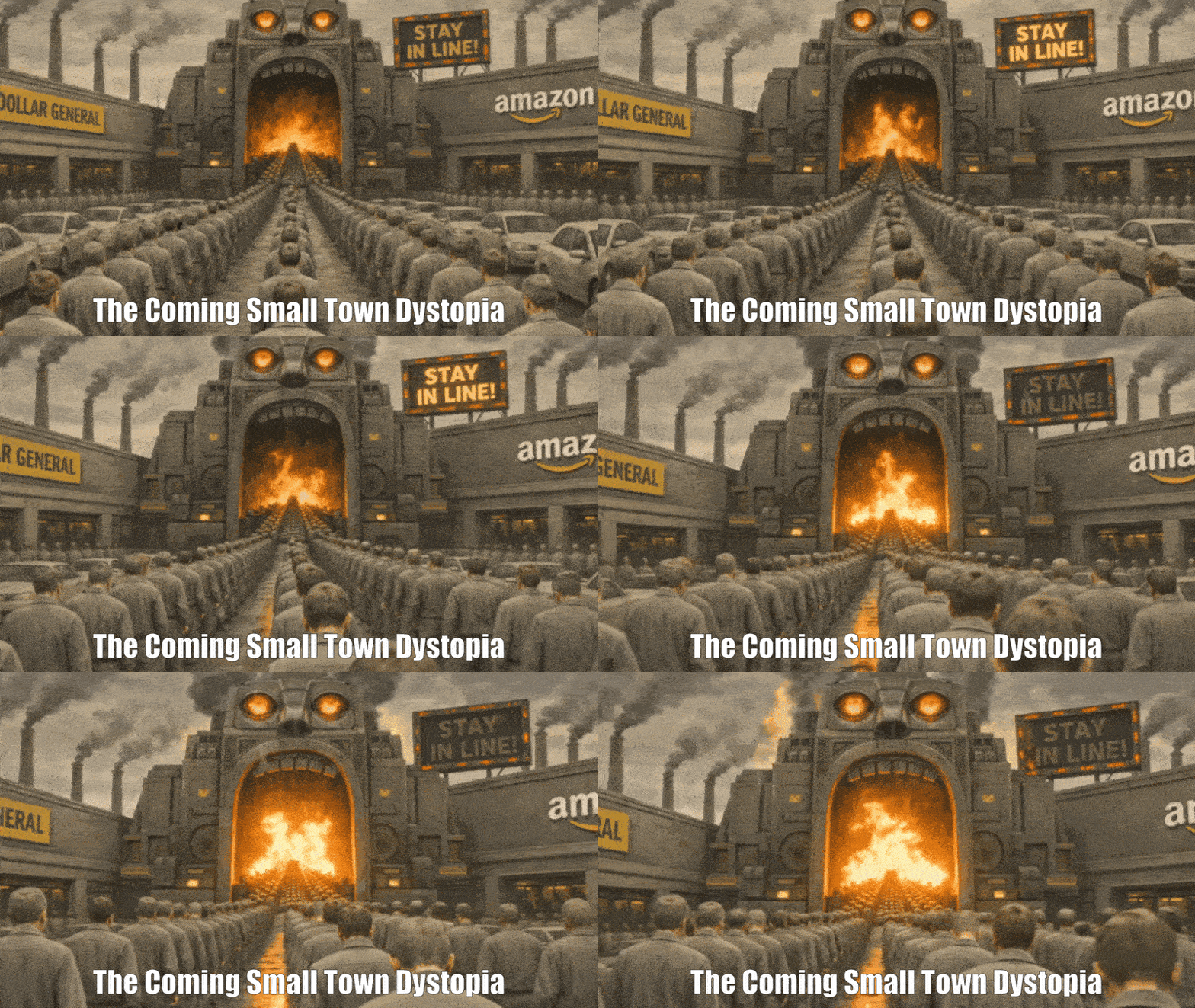
The once-vibrant heart of America's small towns is slowly fading away, replaced by the homogenous sprawl of corporate retail giants. As Main Street businesses shutter and Dollar General stores proliferate, we are witnessing the systematic dismantling of the cultural and economic fabric that has long defined these communities.
The Erosion of Local Entrepreneurship
In town after town, the familiar landmarks of local commerce – the family-owned hardware store, the neighborhood diner, the independent bookshop – are being swept aside by the relentless expansion of national chains. This shift away from locally-owned enterprises is not simply an aesthetic change, but a fundamental transformation of the economic and social structure of these communities.
Small businesses have long been the lifeblood of small-town America, providing not just goods and services, but a sense of identity and pride. When these local entrepreneurs are forced out by the competitive onslaught of corporate retail, it robs a town of its unique character and self-determination. The dollars that once circulated within the community now flow outward, siphoned off by distant shareholders and executives.
The Homogenization of Main Street
As Main Street fades, the landscape is increasingly dominated by a monotonous parade of big-box stores and generic strip malls. Where once stood vibrant, eclectic hubs of community life, we now find a dispiriting sameness – the same national brands, the same prefabricated architecture, the same soulless shopping experiences.
This homogenization not only erodes the distinctive charm of small-town America, but also deprives residents of the serendipitous discoveries and personal connections that once defined the local shopping experience. The loss of these intimate, human-scaled interactions further contributes to a growing sense of disconnection and alienation within these communities.
The Erosion of Civic Engagement
Beyond the economic and aesthetic impacts, the decline of Main Street also threatens the very fabric of civic engagement that has long sustained small-town life. When local businesses and gathering spaces disappear, the informal networks and spontaneous interactions that fostered community cohesion begin to unravel.
Without these crucial touchpoints, residents become increasingly isolated, their sense of shared purpose and collective identity diminished. The decline of Main Street thus undermines the foundations of local democracy, eroding the grassroots civic participation that has historically been the lifeblood of small-town America.
A Call to Action
As we witness the slow suffocation of small-town America, it is crucial that we recognize the profound stakes involved. The erosion of Main Street is not just an economic issue, but a crisis of identity, community, and democracy itself. If we fail to act, we risk the complete surrender of our nation's small towns to the homogenizing forces of corporate consolidation.
The time has come to champion a renewed vision for Main Street – one that empowers local entrepreneurs, fosters vibrant community hubs, and reinvigorates civic engagement. Only by reclaiming the soul of our small towns can we hope to preserve the very essence of what it means to be American.
"The truth doesn't hide. It waits for those brave enough to look."
The Wise Wolf