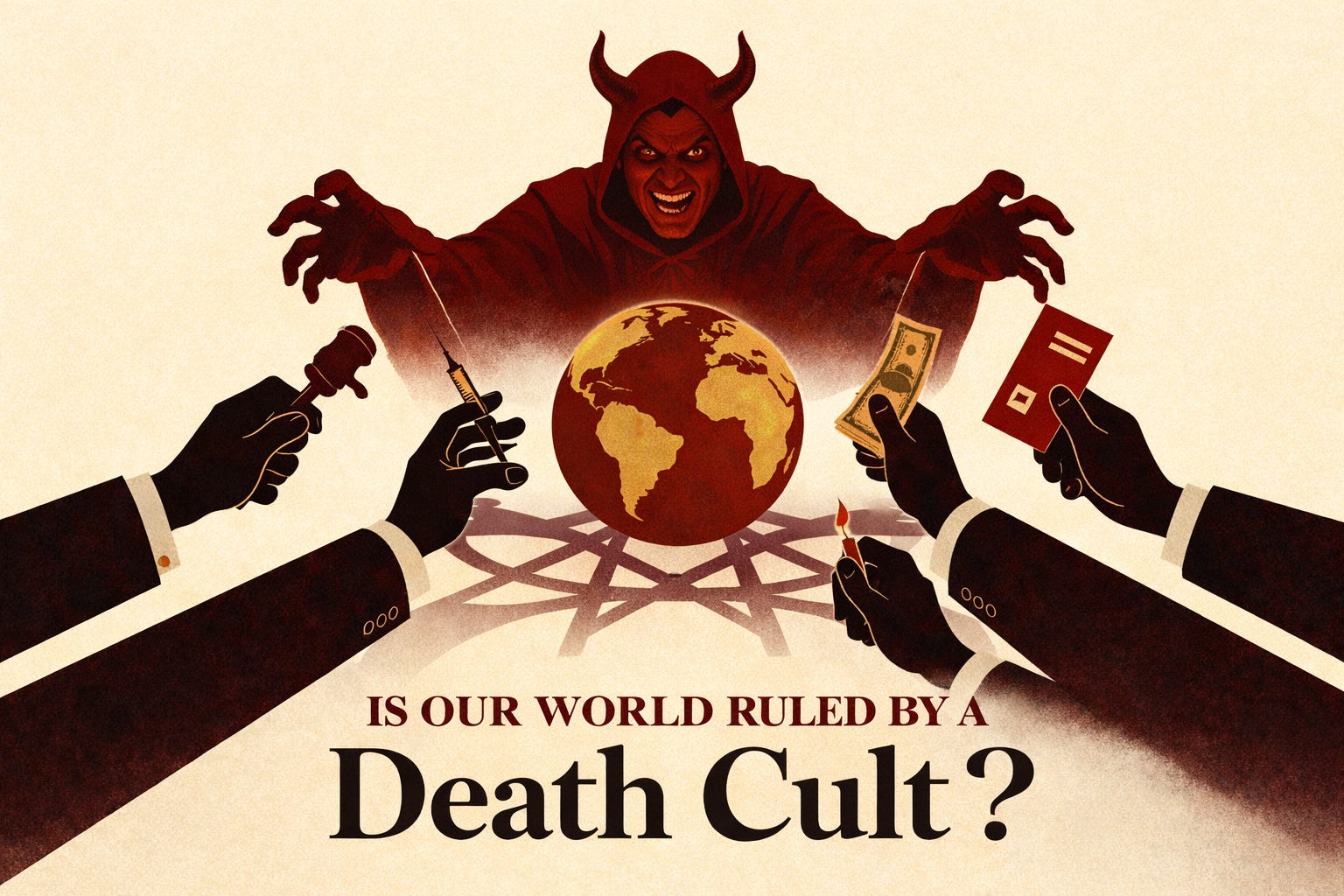
The idea of a Satanic, death cult secretly ruling our world has long been a source of fascination and controversy. As we move further into the 21st century, these rumors and theories have only intensified, with many pointing to various cultural and societal phenomena as evidence of a sinister agenda at play.
## The Enduring Legacy of the Satanic Panic
In the 1980s, the Satanic Panic gripped the American public, with parents and authorities becoming increasingly concerned about the perceived threat of occult practices infiltrating mainstream culture. While much of the hysteria was rooted in unfounded fears and misconceptions, the impact of this era cannot be ignored. The lingering effects of the Satanic Panic have shaped the way many people view and interpret modern cultural trends, leading to an ongoing debate about the potential influence of dark forces in our society.
## The Spectacle of the Super Bowl Halftime Show
One of the most prominent examples used to support the theory of a Satanic, death cult's influence is the annual Super Bowl halftime show. Year after year, these highly anticipated performances have been scrutinized by those who claim to see sinister symbolism and occult references woven into the choreography, costumes, and overall aesthetic. From the use of robed figures and floating eyeballs to the incorporation of fire ceremonies and unsettling imagery, the halftime show has become a lightning rod for those who believe that the entertainment industry is being used as a vehicle for occult indoctrination.
However, it's important to approach these claims with a critical eye. While the halftime show may employ elements that can be interpreted as occult-adjacent, it's equally plausible that these artistic choices are simply meant to create a visually striking and thought-provoking performance. The entertainment industry, by its very nature, often seeks to push boundaries and challenge societal norms, which can lead to the perception of a sinister agenda, even when none exists.
Moreover, the argument that the halftime show is targeting "small children who just want to eat nachos" oversimplifies the audience and their level of engagement. While the Super Bowl is a family-friendly event, it is also a cultural phenomenon that attracts a diverse viewership, many of whom are well-equipped to engage with and interpret the more complex or provocative elements of the halftime show.
## Uncovering the Truth Amidst the Speculation
As with any conspiracy theory, it's crucial to approach the claims of a Satanic, death cult ruling our world with a healthy dose of skepticism. While it's undeniable that there are individuals and organizations that engage in occult or controversial practices, the idea of a vast, interconnected cabal controlling the levers of power is often more fantasy than reality.
That's not to say that we should dismiss these concerns entirely. It's important to remain vigilant and to critically examine the cultural and societal trends that may be indicative of deeper, more complex issues. However, it's equally important to avoid falling into the trap of confirmation bias, where we selectively interpret information to fit our preconceived notions.
Ultimately, the truth about the alleged Satanic influence in our world is likely far more nuanced and complex than the simplistic narratives that often emerge. It's a topic that deserves careful examination, nuanced discussion, and a willingness to consider multiple perspectives before drawing any firm conclusions.
"The truth doesn't hide. It waits for those brave enough to look."
The Wise Wolf