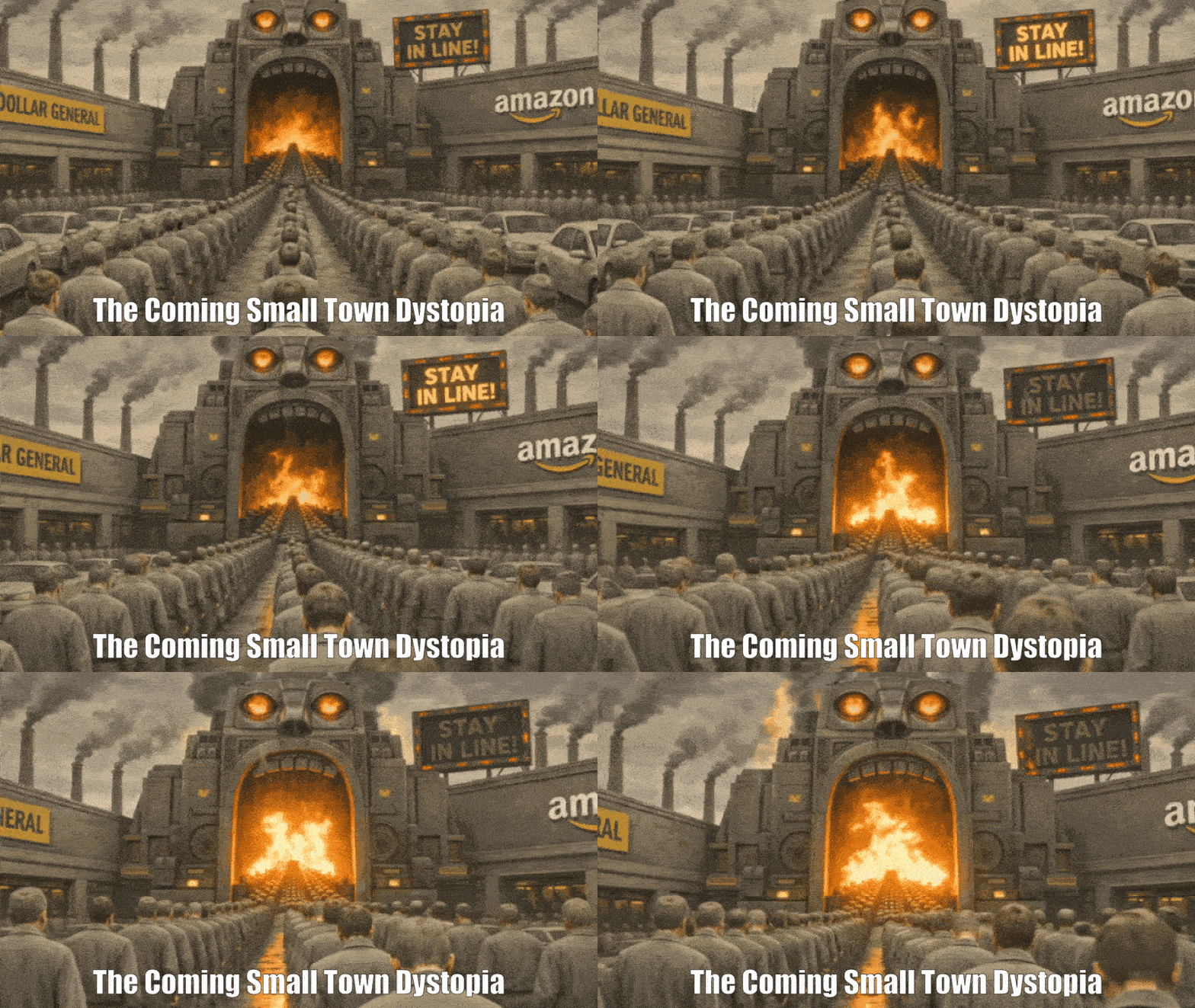
As I navigate the aisles of the local Dollar General, the harsh fluorescent lights and the sterile, artificial scent assault my senses. It's a familiar scene that has become all too common in small towns across America – the once-vibrant Main Street, lined with locally-owned businesses, has been steadily replaced by a sea of corporate retail giants.
The story of this gradual transformation is one of both economic and cultural erosion, a tale of how the soul of our nation is being consumed by the relentless march of capitalism. It's a phenomenon that I've witnessed firsthand, both as a resident of a struggling rural community and as a writer seeking to document the changing face of America.
## The Vanishing of Main Street
In my hometown, the process began innocuously enough – a national chain would open on the outskirts of town, promising convenience and low prices. Slowly but surely, the local mom-and-pop shops that had anchored our community for generations found themselves unable to compete. One by one, they shuttered their doors, their familiar storefronts replaced by the impersonal facades of corporate retailers.
The impact of this transformation extends far beyond the economic. When a community loses its independent businesses, it also loses a piece of its identity – the unique character and sense of place that had defined it for so long. The homogenization of our urban and suburban landscapes, as town after town adopts the same set of chain stores and fast-food restaurants, robs us of the diversity and authenticity that once defined the American experience.
## Fighting Back Against the Corporate Invasion
But this battle is not yet lost. Across the country, there are pockets of resistance – communities that are actively fighting to preserve their Main Streets and the small businesses that give them life. From local "buy local" campaigns to grassroots efforts to attract and support independent entrepreneurs, these communities are proving that there is still hope for the American dream of self-reliance and community-driven commerce.
One such example is the town of Bozeman, Montana, where a coalition of residents, business owners, and civic leaders have banded together to create the "Bozeman Main Street Program." Through a combination of zoning regulations, tax incentives, and promotional initiatives, they have succeeded in maintaining a vibrant, locally-owned downtown core, even as big-box stores have encroached on the city's periphery.
Similarly, in the small town of Fairhope, Alabama, the community has rallied around a local organization called "Main Street Fairhope," which works to preserve the historic character of the downtown district and support the growth of independent businesses. By fostering a sense of civic pride and encouraging residents to shop locally, they have managed to stave off the tide of corporate homogenization that has swept through so many other towns.
These are just a few examples of the grassroots movements that are springing up across the country, as Americans recognize the urgent need to protect the heart and soul of their communities. It is a fight that will require sustained effort, creativity, and a deep commitment to the principles of local self-determination. But for those who cherish the unique identity and vibrancy of small-town America, it is a battle worth fighting.
"The truth doesn't hide. It waits for those brave enough to look."
The Wise Wolf